
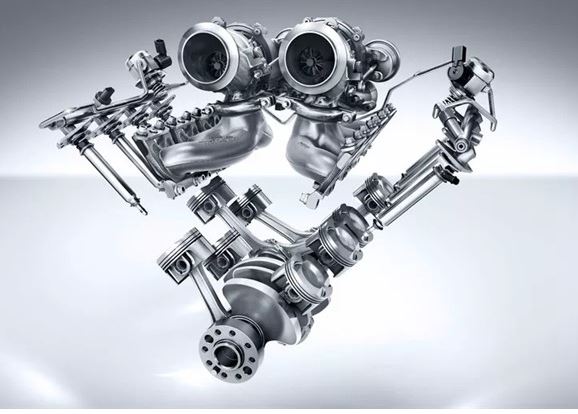
As a core power transmission component in motorcycle engines, the connecting rod is responsible for transferring power between the piston and the crankshaft. The machining accuracy of its two end bores (big end bore and small end bore) directly determines the engine's durability, NVH (noise, vibration, and harshness) performance, and bearing lifespan. With motorcycle OEM manufacturers increasingly demanding higher power output, tighter tolerance control, and shorter production cycles, traditional honing processes are no longer suitable for high-volume, high-precision manufacturing. Single-stroke diamond honing reamer provide a solution that balances both precision and efficiency for the fine machining of connecting rod bores, becoming a key piece of equipment in the upgrading of motorcycle engine manufacturing.
The machining of connecting rods involves multiple processes, and the functional requirements of the inner holes in different parts vary significantly, thus requiring specific honing processes.
1.1 General Machining Process
Motorcycle connecting rod machining follows a standardized process, with each step closely integrated to ensure final accuracy: Forging/Powder Metallurgy Forming → Heat Treatment (to improve strength and wear resistance) → Rough Boring (to remove excess material and initially determine the size) → Fine Boring (to optimize dimensions and prepare for honing) → Honing (final precision machining of the inner hole) → Assembly Inspection. Honing, as the final precision machining process, directly determines the dimensional accuracy, shape tolerance, and surface quality of the inner hole, making it a core control point in connecting rod machining.
1.2 Differentiated Characteristics of the Big End Hole and Small End Hole
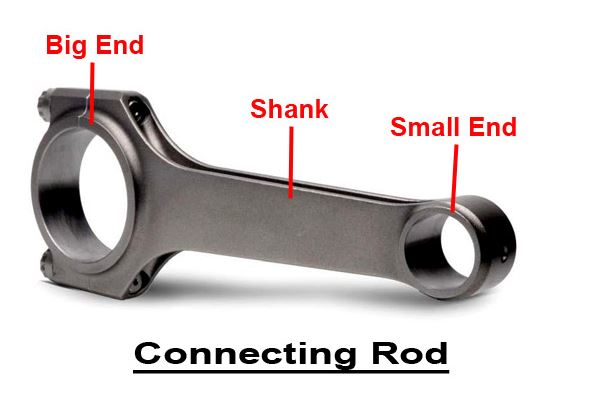
The inner holes at both ends of the connecting rod have different functions, resulting in significant differences in processing requirements:
Big End Hole: It mates with the crankshaft bearing and requires extremely high roundness and cylindricity; otherwise, it can lead to uneven stress on the bearing, increased wear, and affect engine stability. The bore diameter tolerance must also be controlled to ensure a reasonable bearing assembly clearance.
Small End Hole: It mates with the piston pin and requires precise control of the fit clearance to prevent abnormal noise or jamming during operation; the surface texture needs to be adapted to lubrication requirements to ensure the formation of a lubricating oil film and reduce friction loss.
Motorcycle engines are produced on a large scale and are highly cost-sensitive. Connecting rod honing faces three core challenges: tolerance control, production efficiency, and process stability.
2.1 Micron-Level Tolerance Control in High-Volume Production
The inner diameter tolerance of the connecting rod needs to be controlled at the micron level (typically ±2-5μm), with roundness and cylindricity requirements of ≤0.001mm. In mass production of tens or even hundreds of thousands of units, ensuring the consistency of tolerances for every single product and preventing dimensional drift is a bottleneck that traditional processes struggle to overcome.
2.2 Production Capacity Pressure and the Need for Shorter Cycle Times
The motorcycle manufacturing industry is highly competitive, and OEM manufacturers are constantly compressing production cycles. Traditional honing requires multiple reciprocating strokes and spark grinding, resulting in a complex process and long processing time per piece; moreover, equipment start-up, stop, and stroke switching consume a significant amount of time, making it difficult to adapt to the high-efficiency operation requirements of automated production lines.
2.3 Tool Wear and Process Instability
Traditional honing stones wear quickly, requiring frequent adjustments, dressing, and calibration. This not only increases downtime but also easily leads to poor processing consistency due to differences in operator skills; the expansion amount of the tool is difficult to control precisely, further affecting the inner hole accuracy and increasing the scrap rate and rework costs.
Traditional honing processes, based on expandable honing head designs, have numerous shortcomings in the mass production of motorcycle connecting rods, making it difficult to achieve both precision and efficiency.
Multiple processing steps are required to gradually approach the final dimensions, resulting in a lengthy processing flow that is incompatible with high-speed production.
The expansion of the honing reamer is highly susceptible to pressure and temperature variations, easily leading to fluctuations in the inner bore size and poor accuracy stability.
The equipment structure is complex, making it difficult to integrate into fully automated production lines and requiring manual intervention; tool maintenance and repair costs are high, resulting in high unit processing costs, which contradicts the cost control requirements of the motorcycle manufacturing industry.
The most important feature of the single pass honing process is its ability to improve the positional accuracy of the hole to a certain extent. Compared to traditional honing processes, the honing sleeve is pre-set to the final machining size required by the workpiece. Therefore, the cutting process of reaming and honing only requires 1 to 3 reciprocating strokes to complete. After single pass honing, the shape and dimensional accuracy of the hole can be improved, and with appropriate tooling and machine tools, extremely high precision can be achieved for the inner hole.
(1) The outer surface of the honing reamer is coated with a layer of diamond abrasive particles. The sharp edges of these abrasive particles perform the grinding action on the hole wall, while ordinary reamers use their cutting edges to scrape the hole wall.
(2) The honing reamer's tapered sleeve and shank have a small taper fit. Changing the fit position allows for adjustment of the reamer's outer diameter. This method allows for micron-level adjustment of the outer diameter. When the honing reamer wears down, it can be expanded, a feature not available in ordinary carbide reamers.
(3) Honing reamers can achieve micron-level grinding, with the finest reamers capable of removing material within 1 micron, which conventional reamers cannot do.
(4) When used with appropriate connectors, fixtures, and machine tools, honing reamers can achieve ultra-high precision in internal holes: cylindricity: within 1 micron; roundness: within 1 micron; surface roughness: Ra 0.1 or less; tolerance: within 1 micron, which conventional reamers cannot achieve.
(5) Honing reamers, using diamond grinding, can process high-hardness materials such as hardened steel, cemented carbide, and ceramics, which conventional reamers cannot do.
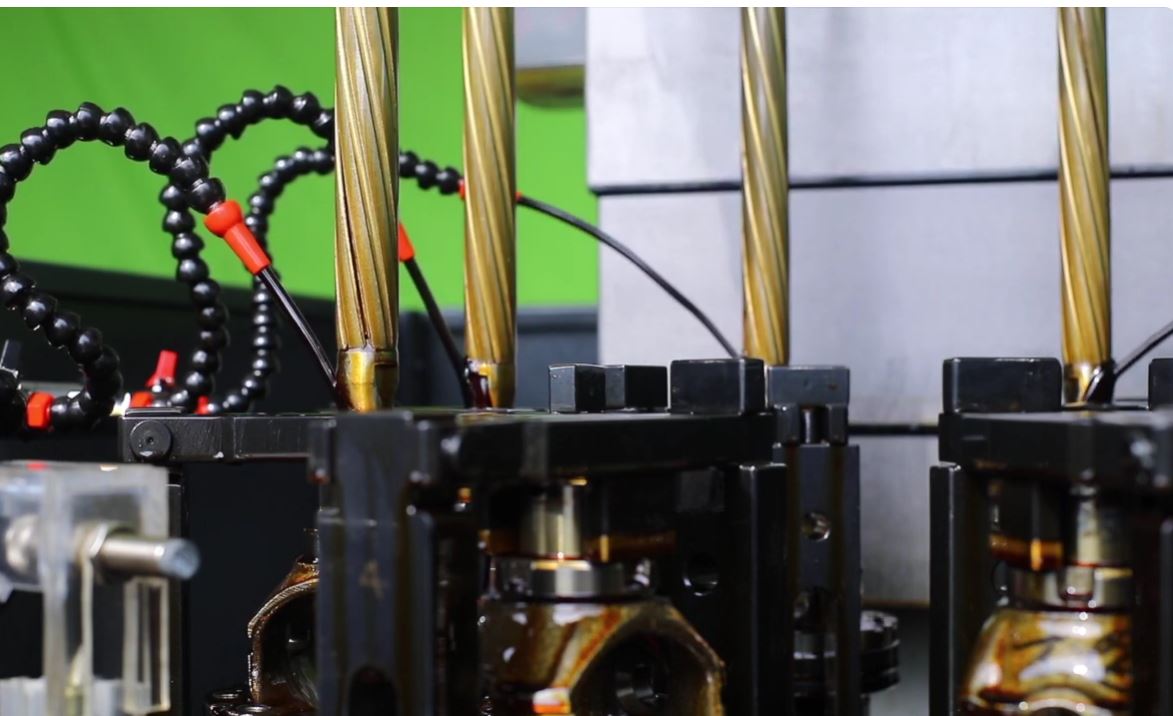
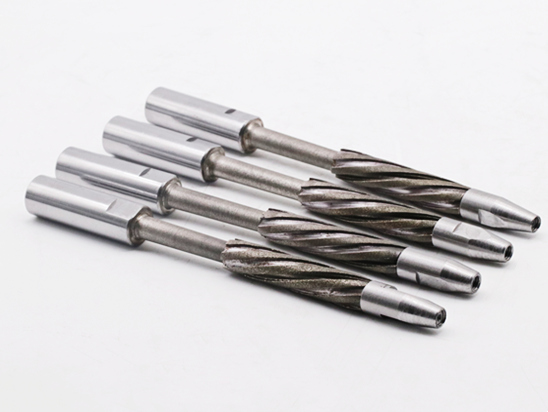
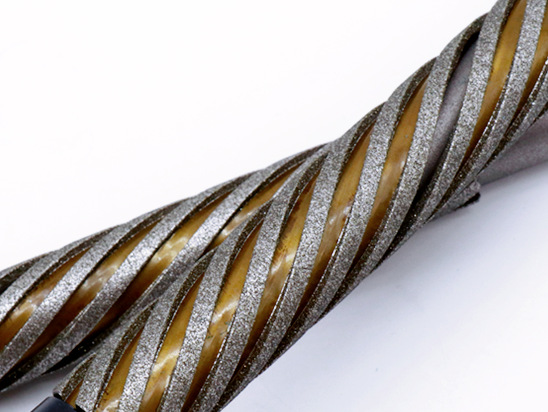
Addressing the differentiated requirements of the large and small end holes, diamond honing tools enable targeted composite machining, ensuring both dimensional accuracy and surface performance of each section.
7.1 Large End Hole Honing: Ensuring Bearing Fit Accuracy
Precise control of the bearing seat hole diameter and geometry ensures roundness and cylindricity consistently reach ≤0.0008mm; the honing process generates a uniform surface texture, ensuring lubricant film stability, reducing bearing wear, and improving engine durability; hole diameter tolerance is controlled within ±2μm, ensuring reasonable bearing assembly clearance.
7.2 Small End Hole Honing: Optimizing Piston Pin Fit Performance
Precisely determining the diameter controls the piston pin fit clearance, preventing abnormal noise and seizing during operation; improving the wear resistance and optimizing the friction characteristics of the inner hole reduces power lossmaintaining consistent surface roughness (Ra0.2-0.6μm) in mass production ensures product reliability.
Based on in-depth research and precise control of working conditions, MORE SUERP HARD has launched a customized electroplated CBN honing reamer solution tailored to specific requirements. Every detail, from the customized design and selection of core materials of the tool to adaptive commissioning, fully demonstrates the technical advantages of the brand. In terms of tool adaptive design, it is precisely matched to the customer's BT40 shank vertical machining center to achieve a seamless connection between the tool and the equipment, avoiding the impact of clamping errors on machining accuracy from the source. The core cutter body is made of high-quality electroplated CBN material. Relying on the brand's independently developed advanced electroplating process, it ensures a tight and firm combination of CBN abrasive and the cutter body. The tool features ultra-high hardness and excellent wear resistance, which can perfectly meet the high-hardness machining requirements of SCM420H material (HRC60). It not only effectively extends the service life of the tool but also reduces the customer's unit machining cost. Most crucially, the self-precision of this customized honing reamer is strictly controlled within 5 μm, which forms a perfect match with the 5 μm precision of the customer's machine tool. This builds an integrated precision machining closed loop of "machine tool - cutting tool", providing a core guarantee for the stable achievement of machining accuracy.
Case of electroplated single pass diamond honing reamer for honing Motorcycle engine connecting rod
Workpiece | two wheeler connecting rod |
Material | SCM420H |
Hardness | HRC60 |
Machine | VMC-BT40 |
Machine accuracy | 5μm |
Processing part | connecting rod hole |
Surface finish | Ra0.8 |
Taper | ≤5 μm |
Out-of-roundness | ≤0.012 mm |
Previous process | Hole machining with CBN inserts, 32.965-32.975 mm |
Final dimension | 32.985 mm |
Honing allowance | 0.01-0.02 mm |
Semiconductor Industry Solutions
PCD & PCBN Tools Grinding Industry
Diamond Cutting Bruting Polishing
Add: No.171 Zhongyuan Rd, Zhongyuan District, Zhengzhou, 450001, Henan, China
Tel: +86-371-86545906
Phone / Whats App: +86 18339903057
E-mail: [email protected]