
An MCD ball burnishing tool is a precision finishing tool that uses a monocrystalline diamond ball to improve the surface quality of machined components through controlled plastic deformation. Unlike cutting processes that remove material with a cutting edge, ball burnishing presses and rolls a hardened ball against the machined surface to level surface irregularities.
MCD ball burnishing tools are designed for precision finishing of steel components, including shafts, bores, spherical surfaces, valve seats and sealing surfaces. For manufacturers looking to improve surface finish after turning, milling or grinding, the tool provides a controlled finishing process that can also modify the mechanical condition of the surface layer.
The MCD ball burnishing tool supplied by MoreSuperHard uses a monocrystalline diamond ball as the working element and can be customized according to ball radius, tool body, shank dimensions and machine interface.
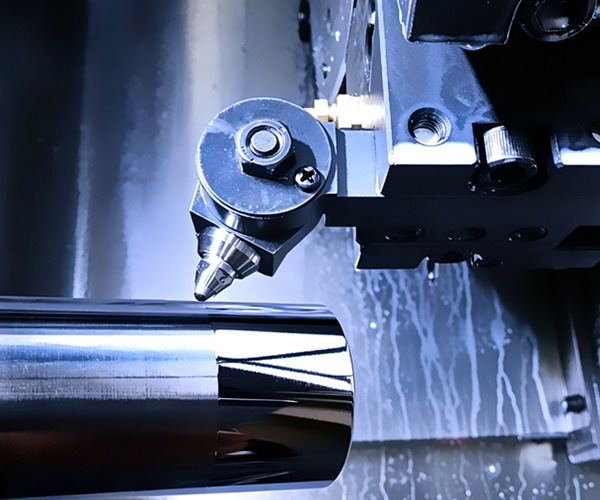
The basic process consists of four stages:
Pre-machining: The workpiece is first turned, milled, ground or otherwise machined to obtain the required geometry and leave an appropriate surface condition for burnishing.
Tool positioning: The MCD ball is positioned against the workpiece surface with a controlled contact condition.
Controlled burnishing: The diamond ball rolls or moves across the surface under a defined force while the machine controls the feed and speed.
Surface finishing: Plastic deformation reduces surface irregularities and modifies the near-surface layer.
Because burnishing acts on the existing surface rather than primarily removing material, the quality of the pre-machined surface is important. Excessive initial roughness or unsuitable process parameters can affect the final result. Research on ball burnishing has demonstrated that penetration depth, feed, speed, ball material and lubrication can all influence surface roughness.
Ball burnishing can reduce surface roughness by plastically deforming and redistributing surface asperities. Experimental studies on steel components have demonstrated significant reductions in surface roughness after ball burnishing, although the achievable result depends on the material and selected parameters.
Plastic deformation during burnishing can introduce compressive residual stresses into the near-surface region. This is one reason why burnishing is used not only for finishing but also for surface enhancement.
The localized plastic deformation produced during burnishing can increase surface hardness through work hardening in suitable materials. The magnitude of the change depends on the workpiece material and process parameters.
Unlike grinding or cutting, conventional ball burnishing does not primarily remove material in the form of chips. Instead, the surface layer is plastically deformed by the contact between the burnishing element and workpiece.
For a precision burnishing tool, maintaining the geometry and condition of the contact element is important because the ball directly interacts with the workpiece surface. MCD provides a very hard and wear-resistant contact material suitable for precision finishing applications.
However, tool material alone does not determine the final surface quality. Burnishing force, feed, speed, ball radius, lubrication and the initial machined surface must be matched to the workpiece. Research consistently identifies process parameters as important factors in ball-burnishing performance.
| Item | Specification |
|---|---|
| Working Element | MCD Monocrystalline Diamond Ball |
| Tool Body | Cemented Carbide / Alloy Tool Steel |
| Ball Radius | R0.5–R2.0 mm |
| Applicable Materials | Steel Components |
| Typical Applications | Shafts, holes, spherical surfaces, valve seats and sealing surfaces |
| Customization | Ball radius, shank dimensions, tool body and machine interface |
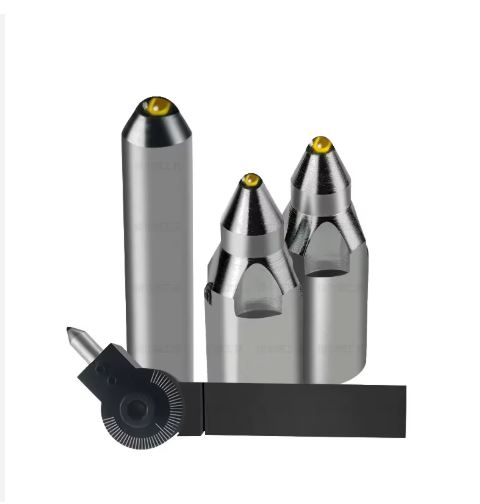
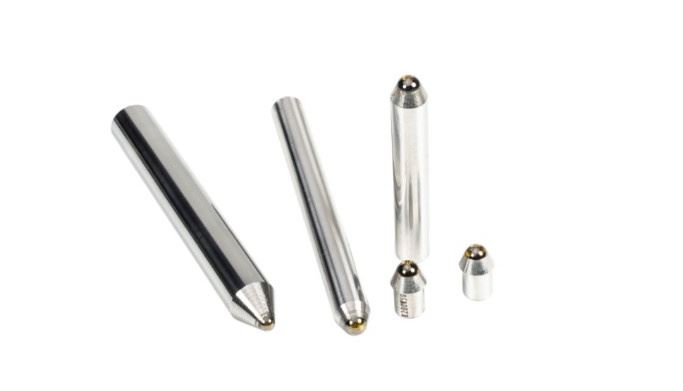
The geometry of a ball burnishing tool makes it suitable for finishing different types of precision surfaces. The supplied application information includes shafts, holes, cylindrical surfaces, spherical surfaces, valve seats and sealing surfaces.
For precision shafts and cylindrical components, an MCD ball burnishing tool can be used after conventional machining to improve the surface condition of the finished diameter.
For suitable internal geometries, customized tool bodies and shank configurations allow the diamond ball to reach the required surface.
The ball-shaped contact element is particularly suitable for applications involving spherical or curved surfaces when the tool geometry and machine motion are properly matched.
Valve seats and sealing surfaces can require controlled surface conditions to support their functional requirements. MCD ball burnishing tools can be designed for these specific geometries according to the workpiece and machine configuration.
| Process | Main Mechanism | Typical Purpose |
|---|---|---|
| Turning | Material removal by cutting | Shape and dimensional machining |
| Grinding | Abrasive material removal | Precision machining and finishing |
| Polishing | Fine abrasive action | Surface refinement |
| Ball Burnishing | Controlled plastic deformation | Surface finishing and surface enhancement |
Ball burnishing should not be viewed as a universal replacement for grinding or polishing. Instead, it can serve as a finishing or surface-enhancement operation after conventional machining when the workpiece and process conditions are suitable.
Choosing the right tool is only part of the process. The interaction between tool geometry, force and machine parameters determines the final surface condition.
Burnishing force: An important factor affecting surface deformation and roughness.
Feed rate: Influences the overlap and resulting surface texture.
Burnishing speed: Can affect surface formation depending on the workpiece and lubrication.
Ball radius: Determines the contact geometry between the tool and workpiece.
Lubrication: Influences friction and the tool-workpiece interaction.
Initial surface roughness: Determines the surface condition available for subsequent burnishing.
Published research shows that burnishing force, feed, speed, lubrication, ball diameter and the initial machined surface can all affect the final surface finish. Therefore, process parameters should be developed for the specific workpiece rather than copied directly from another application.
---EDITOR: Doris Hu, Penny Xu
---POST: Drois Hu
Semiconductor Industry Solutions
PCD & PCBN Tools Grinding Industry
Diamond Cutting Bruting Polishing
Add: No.171 Zhongyuan Rd, Zhongyuan District, Zhengzhou, 450001, Henan, China
Tel: +86-371-86545906
Phone / Whats App: +86 18339903057
E-mail: [email protected]