
HPL (High-Pressure Laminate) is a composite board made of multiple layers of kraft paper impregnated with phenolic resin, covered with a decorative paper impregnated with melamine resin, and pressed under high temperature (130-150℃) and high pressure (800-1200MPa).
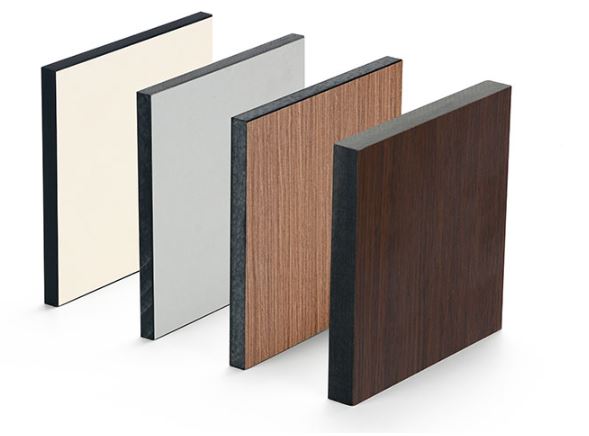
HPL is widely used in the walls of public spaces, furniture, partitions, as well as for indoor and outdoor decoration, laboratories, and medical environments, among other scenarios that require high wear resistance, stain resistance, ease of cleaning, and durability.
Compared with common materials such as particleboard, medium-density fiberboard, and melamine board, the significant differences between them also result in higher processing requirements for HPL materials
Despite the excellent performance of HPL sheets, their unique material structure presents numerous challenges in actual cutting and processing, becoming a key bottleneck restricting production efficiency and product quality:
Extreme Abrasion Resistance Leads to Rapid Tool Wear
The high hardness of the resin in HPL sheets after curing, coupled with the potential presence of wear-resistant fillers (such as alumina), causes ordinary cutting tools to dull rapidly during cutting, necessitating frequent tool replacements and severely impacting production continuity.
Brittle Surface Prone to Chipping Defects:
The limited bonding strength between the HPL surface decorative paper and the underlying substrate makes it susceptible to chipping and breakage during cutting if the cutting edge is not sharp enough or the cutting force is too high. "Edge chipping," especially on the decorative side, directly leads to product scrap.
Poor cutting quality stability:
As the tool wears down, cutting accuracy gradually decreases, resulting in problems such as cutting size deviations and surface roughness. Repeated adjustments to processing parameters are necessary, making it difficult to guarantee consistency in mass production.
Limited processing efficiency:
To reduce edge chipping and tool wear, traditional processing typically requires reducing cutting speed and feed rate, leading to a decrease in the amount processed per unit time, which cannot meet the needs of large-scale production.
In summary, HPL is a more advanced, more durable material that requires more sophisticated processing equipment and saw blades. It outperforms ordinary sheets in terms of wear resistance, cutting stability, cut edge smoothness, and resistance to heat, shock, and moisture. However, precisely because of these characteristics, when processed with traditional alloy saw blades, problems such as blade dulling, cut edge cracking, high cutting heat, and unstable cutting quality often occur very quickly.
Property | Particleboard / MDF / Melamine Board / Common Wood Panels | HPL |
Material Composition | Made from wood chips or wood fibers bonded with resin | Layers of kraft paper impregnated with phenolic or melamine resin, laminated under high pressure with decorative and overlay layers |
Surface Hardness / Density / Compactness | Relatively low to medium hardness; less dense and less compact | High hardness, high density, extremely compact and uniform |
Surface Finish & Stability | Decorative surface film; edges and core may absorb moisture and swell | Closed, thermosetting resin surface with decorative and protective layers; waterproof, moisture-resistant, highly stable |
Wear Resistance / Scratch Resistance / Stain Resistance / Water Resistance | Moderate; surface may scratch easily and edges can absorb water | Excellent resistance to wear, scratches, stains, and moisture |
Typical Applications | Indoor furniture, general-purpose cabinetry, lightweight applications | Furniture, cabinets, countertops, wall panels, commercial interiors, high-traffic environments |
Processing Difficulty / Tool Requirements | Lower—TCT (carbide) blades are typically sufficient | High—due to high density and hardness, requires more wear-resistant & sharper blades (PCD recommended) |
Faced with numerous challenges in HPL sheet processing, traditional carbide saw blades are no longer sufficient to meet the demands of high-efficiency, high-precision production. Polycrystalline diamond (PCD) circular saw blades, with their exceptional hardness, wear resistance, and cutting stability, have become a key technological solution to overcome the challenges of HPL processing. They not only significantly improve cutting efficiency and processing quality but also drastically reduce tool change frequency and overall costs, bringing revolutionary efficiency improvements to HPL manufacturers.
PCD (Polycrystalline Diamond) is a superhard tool material made by sintering diamond micropowder with a metal binder under high temperature and pressure.
Advantages of PCD saw blades in processing HPL:
1. Ultra-high hardness and extremely strong wear resistance: The hardness and wear resistance of PCD saw blades far exceed those of hard alloys. For HPL, a high-density, hard resin-containing, multi-layer composite wear-resistant sheet, PCD can more easily handle the processing.
2. Extremely long service life / low maintenance / low replacement frequency: Compared with alloy saw blades, PCD saw blades can extend the service life of cutting abrasive materials by several times. They are suitable for large-scale, continuous production lines.
3. High cutting edge quality, smooth, few burrs, no edge breakage: Due to the sharp, wear-resistant teeth of PCD, it is very friendly to materials prone to edge breakage and layer cracking, which can significantly reduce problems such as edge burrs, layering, and layer cracking, ensuring the yield and surface quality of the finished products.
4. Stable, efficient, suitable for large-scale production: For furniture factories and large-scale sheet processing, PCD saw blades can significantly reduce the frequency of machine stoppage for blade replacement, reduce scrap, and cutting defects, improving production efficiency and product qualification rate.
5. Universal for HPL and other composite laminated boards: Besides HPL, PCD saw blades perform well on medium-density fiberboard, particleboard, melamine board, composite flooring, density board, plastic composite board, and other types of boards.
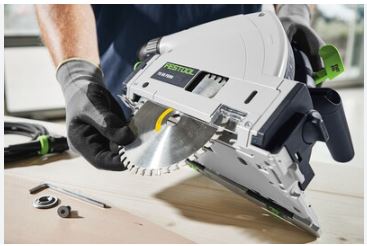
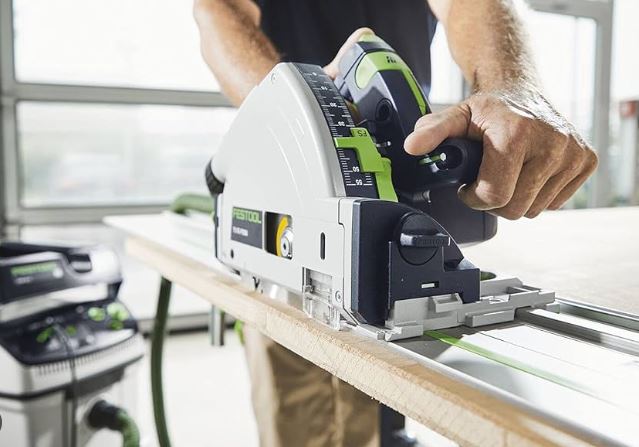
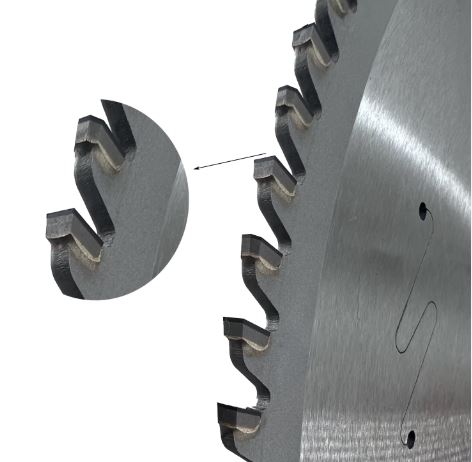
HPL sheet applications (such as furniture door panels and laboratory countertops) demand extremely high dimensional accuracy and edge quality. PCD saw blades achieve a breakthrough in precision through precise cutting control:
Improved Edge Smoothness:
The sharp cutting edge of the PCD saw blade enables "shearing" cutting, rather than the "extrusion-fracture" cutting of carbide. Therefore, the cut HPL edges are burr-free and delaminated, with a surface roughness Ra controlled below 1.6μm, eliminating the need for subsequent grinding.
Significantly Reduced Edge Chipping:
Addressing the issue of easy edge chipping on the surface of HPL, PCD saw blades, through optimized tooth profiles (such as using ATB tooth profiles) and cutting parameters, can reduce the edge chipping rate of decorative surfaces from 15%-20% for carbide to 1%. The following features are particularly suitable for decorative surfaces that are prone to showing defects, such as white and light-colored surfaces;
Enhanced dimensional stability:
Due to slow blade wear, the cutting dimensional deviation of PCD saw blades can be controlled within ±0.1mm during batch cutting (the deviation may increase to ±0.3mm after cutting 100 sheets of board with a carbide saw blade), ensuring product consistency and reducing the amount of adjustment work during assembly. Higher Processing Speed: Breaking Efficiency Bottlenecks and Boosting Capacity
In automated HPL production lines, processing speed directly determines capacity. The high-speed cutting capability of PCD saw blades is key to increasing capacity:
Double Feed Speed:
As mentioned earlier, the safe feed speed of PCD saw blades can reach 15-25 m/min, which is 1.5-2 times that of carbide saws. Taking the cutting of 1.2m wide HPL sheets as an example, PCD saw blades can cut 120-200 sheets per hour, while carbide saws can only cut 60-100 sheets, resulting in a significant increase in capacity.
Stable Quality at High Speeds:
Even at high feed speeds, PCD saw blades maintain stable cutting quality, without issues like chipping or roughness due to increased speed. In contrast, if carbide saw blades are forcibly increased in speed, edge wear will occur rapidly, and cutting quality will drop sharply.
Compatible with Automated Equipment:
Modern HPL Production primarily utilizes automated equipment such as CNC panel saws and horizontal machining centers. The high-speed spindles of these machines (speeds reaching 6000-12000 rpm) require high-performance cutting tools. PCD saw blades, with their high-temperature resistance and wear resistance, perfectly meet the operational demands of this automated equipment, achieving a synergy of "high speed + high efficiency + high quality."
Cutting force is a crucial factor affecting machining stability and equipment lifespan. PCD saw blades reduce cutting force by optimizing the cutting process:
Cutting Force Reduction of 20%-30%:
PCD's high sharpness reduces friction between the tool and material, significantly lowering cutting force. For example, when cutting 18mm thick HPL sheet, the radial cutting force of a PCD saw blade is approximately 80-100N, while that of a carbide saw blade is approximately 120-150N;
Reduced Spindle Load:
Lower cutting force means less load on the spindle bearing, reducing wear and extending spindle life (typically by 30%-50%), thus reducing equipment maintenance costs;
Reduced Energy Consumption:
The reduction in cutting force directly reduces equipment energy consumption. Actual calculations show that HPL cutting equipment using PCD saw blades consumes less energy per unit compared to equipment using carbide saw blades. 15%-20% savings, resulting in considerable electricity cost savings over long-term operation.
When cutting HPL sheet metal at high speed, the friction between the tool and the material generates a large amount of heat (cutting zone temperature can reach 300-500℃). If the tool's heat resistance is insufficient, it will lead to softening of the cutting edge and accelerated wear. PCD saw blades possess excellent heat resistance:
Excellent high-temperature stability:
PCD maintains stable hardness and structure below 800℃, far exceeding the actual cutting temperature of HPL (300-500℃), thus the cutting edge will not soften due to high temperatures;
High thermal conductivity:
The thermal conductivity of diamond is 5-6 times that of cemented carbide. PCD saw blades can quickly conduct heat from the cutting zone to the saw blade substrate, and then release it through the saw blade's heat dissipation structure (such as heat dissipation holes), preventing heat accumulation at the cutting edge;
Reduced thermal deformation:
Because heat can be dissipated quickly, the thermal deformation of the PCD saw blade matrix is minimal, ensuring the dynamic balance stability of the saw blade during high-speed rotation, further improving cutting accuracy, and avoiding cutting deviations caused by saw blade deformation.
The surface brittleness of HPL sheets differs significantly from the toughness of the underlying layer. A targeted tooth shape design is necessary to reduce chipping and improve cutting quality. The following two tooth shapes are recommended:
ATB Tooth Shape (Alternate Top Bevel):
This is the preferred tooth shape for HPL cutting. Its tooth tips feature alternating left and right 45° inclinations, enabling "progressive" cutting. The beveled edge first cuts the surface decorative paper before cutting the underlying substrate, effectively reducing surface chipping. It is generally recommended that the ATB tooth shape have 60-100 teeth (adjusted according to the saw blade diameter). Too many teeth can lead to poor chip removal, while too few teeth will reduce cutting accuracy.
High Positive Rake Angle Tooth Shape:
A positive rake angle (usually 15°-20°) reduces cutting resistance and lowers HPL. The surface compressive stress further reduces edge chipping; it is especially suitable for thinner HPL sheets (<10mm), preventing bending and deformation due to excessive cutting force.
Edge Protection Design:
Selecting PCD saw blades with a "beveled edge" (a small flat or rounded edge) improves the impact resistance of the edge, preventing chipping caused by impurities (such as tiny metal particles) within the sheet during cutting.
The diameter and kerf width (Kerf) of the PCD saw blade need to be determined based on the type of processing equipment and the parameters of the HPL sheet material:
Diameter Selection:
CNC Panel Saw (Tabletop Saw): Typically compatible with 300-400mm diameter blades, suitable for cutting 12-25mm thick HPL sheets. Recommended speed: 6000-8000rpm;
Horizontal Panel Saw/Beam Saw: Compatible with 450-600mm diameter blades, suitable for batch cutting of 25-50mm thick HPL sheets. Recommended speed: 4000-6000rpm;
High-Speed Precision Saw: Compatible with 250-300mm diameter blades, suitable for high-precision cutting of thin HPL sheets (<10mm). Speeds can reach up to... 10000-12000rpm;
Kerf width selection: The recommended kerf width for cutting HPL sheets is generally 0.8-1.2mm. Too narrow (<0.6mm) will lead to poor chip removal and heat buildup; too wide (>1.5mm) will increase material waste, especially for high-value HPL sheets, where a balance needs to be struck between chip removal and material utilization.
Different specifications of HPL sheets (density, thickness) require matching with corresponding PCD saw blade parameters to ensure optimal cutting results:
Sheet Density Matching:
High-density HPL sheets (density > 1.5 g/cm³) have higher hardness, requiring a high-wear-resistant PCD saw blade (such as a PCD blade head made with high-purity diamond micron powder), while reducing the feed speed (15-18 m/min) to avoid rapid edge wear; low-density HPL sheets (density < 1.3 g/cm³) can have a slightly higher feed speed (20-25 m/min), and a saw blade with a medium number of teeth can be selected;
Sheet Thickness Matching:
Thin sheets (< 10 mm):Select a saw blade with a higher number of teeth (80-100);
For thicker plates (>25mm): Choose saw blades with fewer teeth (50-70 teeth) and a slightly wider kerf (1.0-1.2mm) to improve chip removal efficiency and prevent heat buildup.
For PCD saw blades (circumferential tangential speed), the recommended linear speed (circumferential tangential speed) is 30-50m/s. The rotational speed needs to be calculated based on the saw blade diameter (rotational speed = linear speed × 1000 ÷ π ÷ diameter). For example, for a 400mm diameter saw blade, the rotational speed should be controlled between 2387-3979rpm to avoid excessive speed causing dynamic imbalance or excessive speed increasing cutting force.
The quality of PCD saw blades on the market varies greatly. While low-priced, inferior products may have lower initial costs, their short lifespan and poor cutting quality ultimately increase overall costs. Therefore, it is essential to choose professional-grade products, paying attention to the following three points:
PCD Blade Head Quality:
Professional-grade PCD saw blades use high-purity (over 99%) diamond micro-powder and a cobalt-based binder, resulting in uniform blade head hardness and a strong bond. A high-quality blade head will have a smooth, pore-free, and crack-free surface.
Material Quality:
The saw blade body uses high-strength alloy steel plates (such as 65Mn steel), which undergo heat treatment and precision grinding, with a flatness error of <0.1mm, ensuring dynamic balance stability during high-speed rotation. Professional brands will provide the dynamic balance grade of the matrix (usually G2.5 or higher).
Specifications and requirements for PCD saw blades needed by Indian customers:
PCD Saw Blade Geometry
Outer Diameter (OD) | 300mm |
Kerf / Plate Thickness | 3.2 mm |
Number Of Teeth | 96T |
Bore Diameter (ID) | 30mm |
Tooth Form | Flat Top / Slight Radius |
Hook Angle | 0° To –5° (Negative/Neutral For HPL) |
Expansion Slots | Laser-Cut Anti-Vibration |
Body Material | Alloy Steel (42crMo / 1.2311 or Equivalent) |
Hardness | 38–45 HRC |
Dynamic Balance | G6.3 or Better |
Plate Flatness | ≤ 0.15mm |
Side Runout (TIR) | ≤ 0.05mm (Prefer £0.03 mm) |
Concentricity: | ≤ 0.03mm |
PCD Saw Blade Body Requirement
PCD Tip Requirements
PCD Type | High Diamond Volume PCD (£70%) |
PCD Table | Thickness: 0.8 – 1.2mm |
Grain Size | Fine / Micro Grain |
Substrate | Cobalt-Bonded Tungsten Carbide |
Brazing Method | Vacuum Brazed |
Tooth Protection | Micro-Chamfer 0.1–0.3mm |
The customer's required specifications are the regular stock of Moresuperhard, and relevant test reports can also be provided. Considering the material properties, the Moresuperhard PCD saw blade can offer a more stable, higher quality and more efficient processing solution.
---EDITOR: Doris Hu, Cris Zhang
---POST: Doris Hu
Semiconductor Industry Solutions
PCD & PCBN Tools Grinding Industry
Diamond Cutting Bruting Polishing
Add: No.171 Zhongyuan Rd, Zhongyuan District, Zhengzhou, 450001, Henan, China
Tel: +86-371-86545906
Phone / Whats App: +86 18339903057
E-mail: [email protected]